
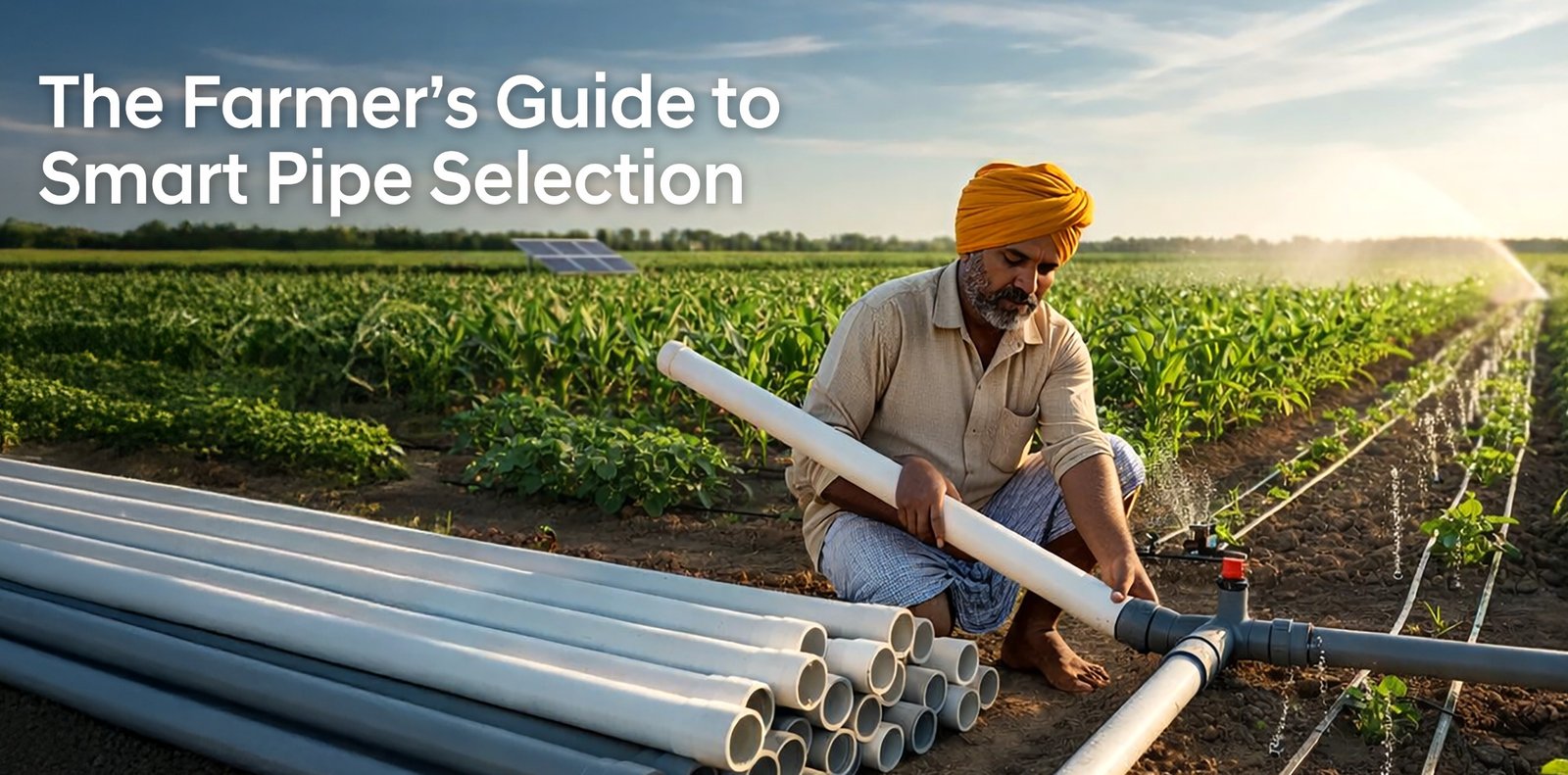
A Complete Guide to Choosing the Right Agri Pipes for Your Farm
The right infrastructure forms the backbone of a productive farm. Around half of India’s cultivated land now has access to irrigation infrastructure, making the choice of reliable water systems increasingly important for farmers’ productivity and sustainability. A well-run farm depends on the health of crop yields, efficient water use, and ultimately, on the revenue that secures the farmer’s livelihood and legacy.
While this decision can feel complex, it doesn’t have to be that way. The key to making this particularly important decision is to understand a farm’s specific needs and, accordingly, the solutions available. The right agri pipes do more than carry water; they take the farm’s future forward. In this guest blog post, we’ll explore what it takes to create a reliable foundation, from selecting materials to proper installation techniques.
These insights are informed by field-level observations and practical irrigation planning experience across different farming conditions.
Understanding the Farm's Unique Water Needs
Check what kind of water source is around before selecting any pipe. The total area under irrigation and the crop types dictate the volume and frequency of water needed. Sloping fields may require different pressure management than flat lands. A detailed plan prevents you from under- or over-investing in your system's capacity.
- Prepare the field layout and water points
- Keep in mind the peak season water demand per acre
- Identify the primary water source and its pressure
- Note the type of soil & any drainage issues
1. Selecting Reliable Pipe Material
Pipe material determines lifespan, cost, and suitability. More traditional options like metal or concrete are not only heavy but also prone to rust and scaling. The right material resists chemical, soil, and weather attacks, ensuring a consistent water flow. This is why farms today have shown a growing trend towards advanced polymers, thanks to their durability and cost-effectiveness.
What Makes uPVC a Top Choice for Modern Farms
uPVC, or Unplasticized Polyvinyl Chloride, has revolutionized farm water management. Its smooth interior prevents scaling and minimizes friction. It allows more water to flow with less energy. Lightweight and easy to transport, uPVC pipes make installation faster and less labor-intensive, which is a significant benefit for farmers managing large areas. Their corrosion and chemical resistance also means they require less maintenance than traditional metal or clay pipes.
Many farms that have replaced older metal or clay pipes with uPVC systems benefit from easier installation, fewer leaks, and more consistent water flow across their fields. Vegetable farms, for example, find daily irrigation routines simpler, while paddy fields benefit from steadier soil moisture, helping support uniform crop growth throughout the season.
2. Making Sure the Pipe Size is Correct
The next obvious step is to get the pipe’s size correct. One that's too large is an unnecessary capital expense. Consult your supplier or a local irrigation expert to determine the measurements correctly, based on the water flow rate. Always choose a pipe with a pressure rating higher than your system's maximum operating pressure to ensure safety and longevity.
3. Ensuring Correct Installation Techniques
Proper installation protects your investment. For underground lines, ensure trench depth is below the frost line and free of sharp stones. Use compatible uPVC agri pipes & Fittings and follow the manufacturer's joining instructions precisely. A well-laid system prevents future breaks and maintenance headaches.
Do’s:
- Choose the right pipe diameter for your water volume needs.
- Inspect all pipes and fittings for defects before installation.
- Maintain recommended water pressure to avoid stress on the system.
- Schedule regular inspections, especially before and during the irrigation season.
Don’ts:
Never use incompatible fittings, as they are a primary cause of leaks.
Don’t ignore the pipe's pressure and temperature limits.
Avoid improper trenching that can lead to pipe damage over time.
4. Investing in Long-Term Value Over Short-Term Cost
While initial cost is a factor, view this as a long-term investment. An inferior quality pipe may crack, clog, or leak within a few seasons. Additionally, it leads to water waste, crop stress, and costly emergency repairs. A high-quality system, though perhaps more upfront, delivers reliable performance year after year, securing your farm's productivity and sustainability.
Closing Thoughts
Your farm's irrigation system is its vital lifeline. Choosing the right components requires careful thought about your specific needs, local environment, and product quality. Prioritizing durable, efficient, and correctly specified piping builds a true foundation for long-term resilience and growth.
Selecting irrigation components that meet certified quality standards and proven field performance helps ensure consistent water flow, reduced maintenance needs, and long-term farm productivity.
About the Author:
Shaurya Thakur is a content writer with experience creating industry-focused articles on agricultural infrastructure, irrigation systems, and farm sustainability. His work emphasizes clarity, practical insights, and value-driven information for farmers and agri-industry audiences.


0 Comments